Azerion Chat
Consumer AI suite unifying the best text, image, video and audio models. One plan, one credit pool, one chat with auto model routing and compare mode.
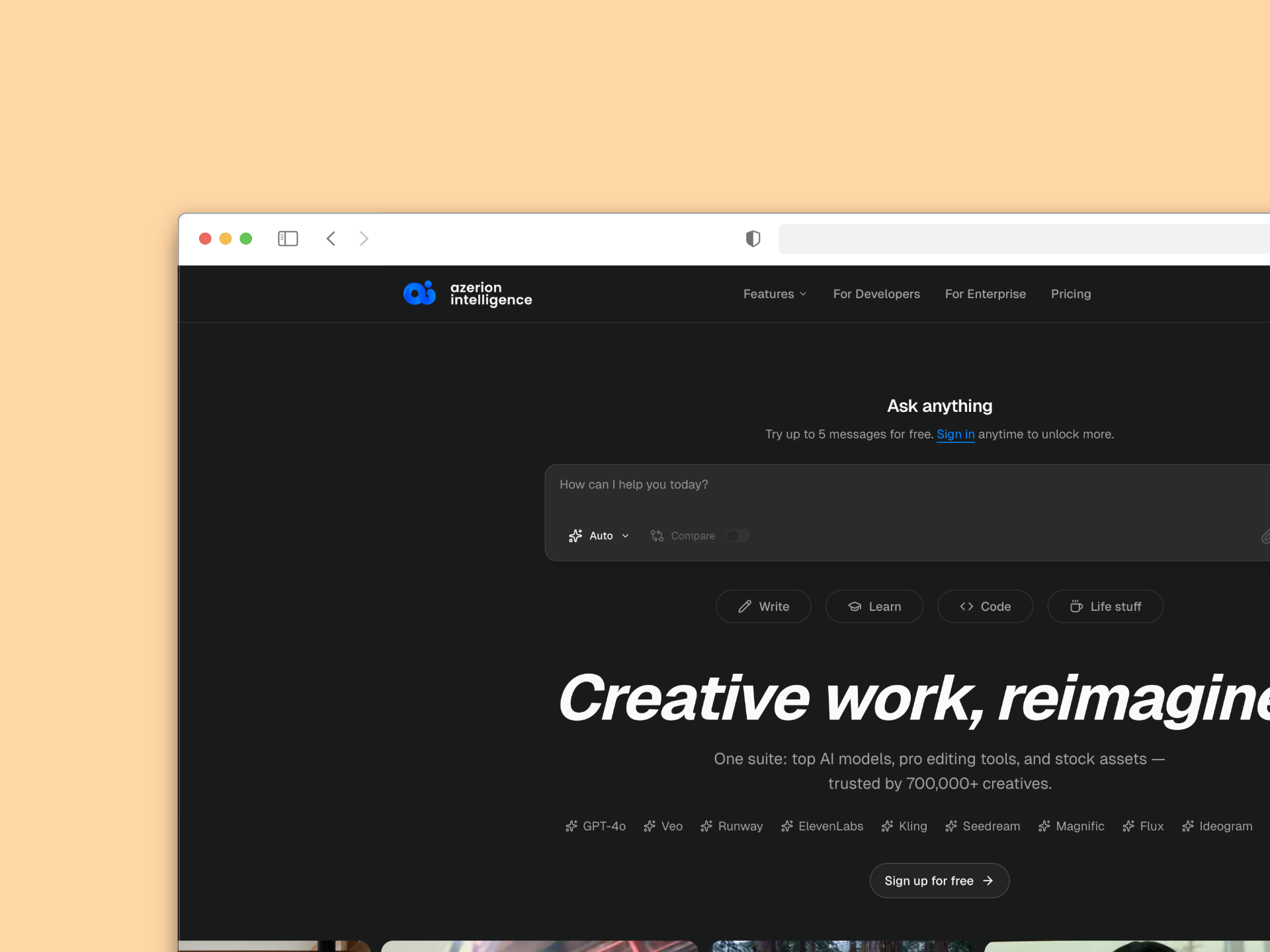
I led the product on chat.azerion.ai, a consumer AI suite that gives one entry point to top text, image, video and audio models. I owned the UX, the roadmap, the front-end work and the entire AI logic, working with one front-end developer and two back-end developers. The product ships with a routing agent that reads the user's intent and calls the right model, an Auto mode that picks the best model per message, and side-by-side model comparison.
Most people who want to use AI seriously end up paying for three or four different tools. One for chat, one for images, one for video, one for voice. We built Azerion Chat so a single subscription gives full access to every modality, with the latest models from GPT, Claude, Gemini, Veo, Kling, Seedream, ElevenLabs and Flux all reachable from the same prompt bar.
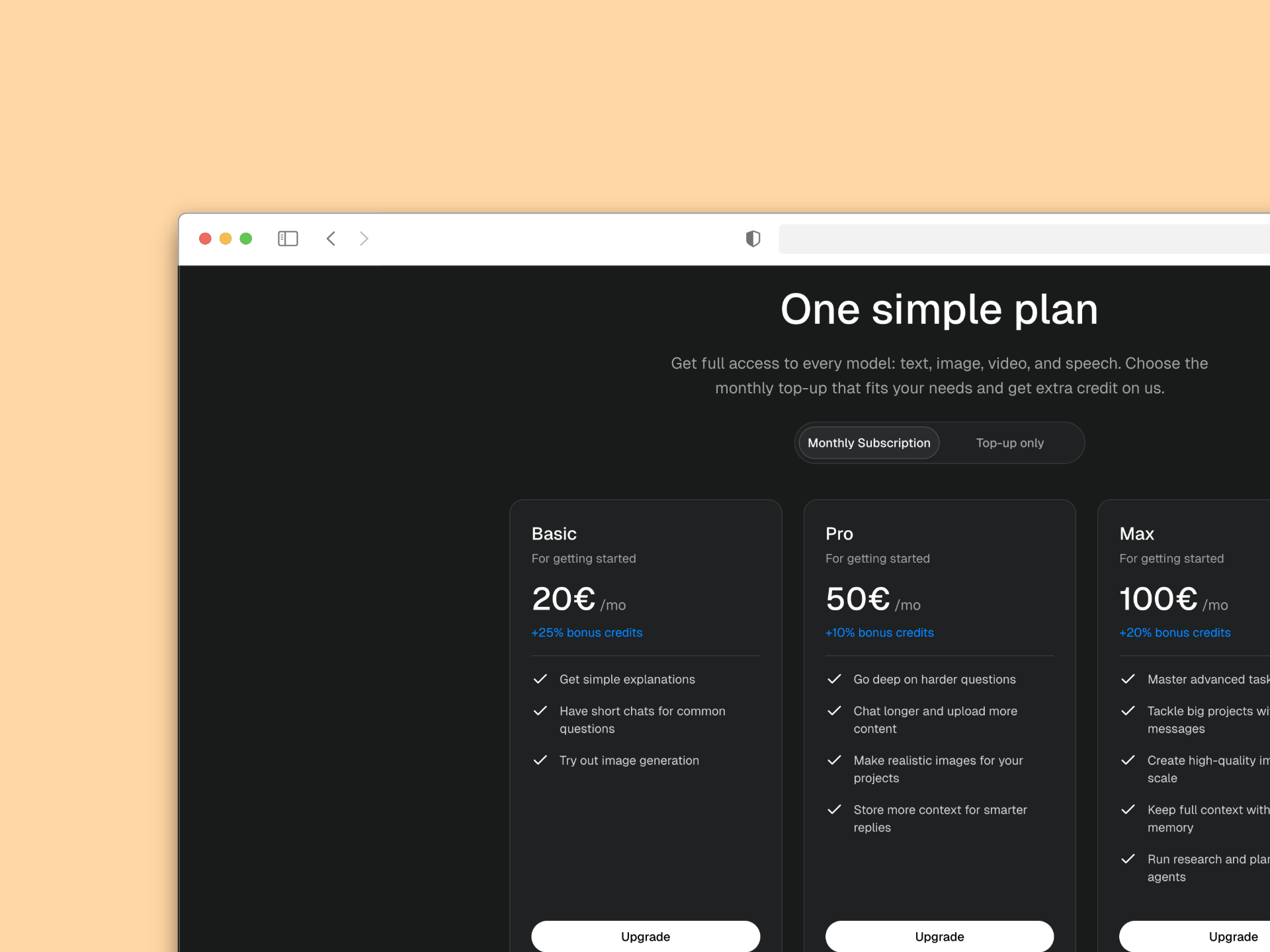
The pricing was a deliberate product choice. One simple plan with three tiers, monthly subscription or top-up only, and bonus credits that grow with the tier. No per-model paywalls, no separate add-ons. The credit system runs across every tool in the suite, so a user choosing between generating an image or running a long chat is making a creative decision, not a billing one.
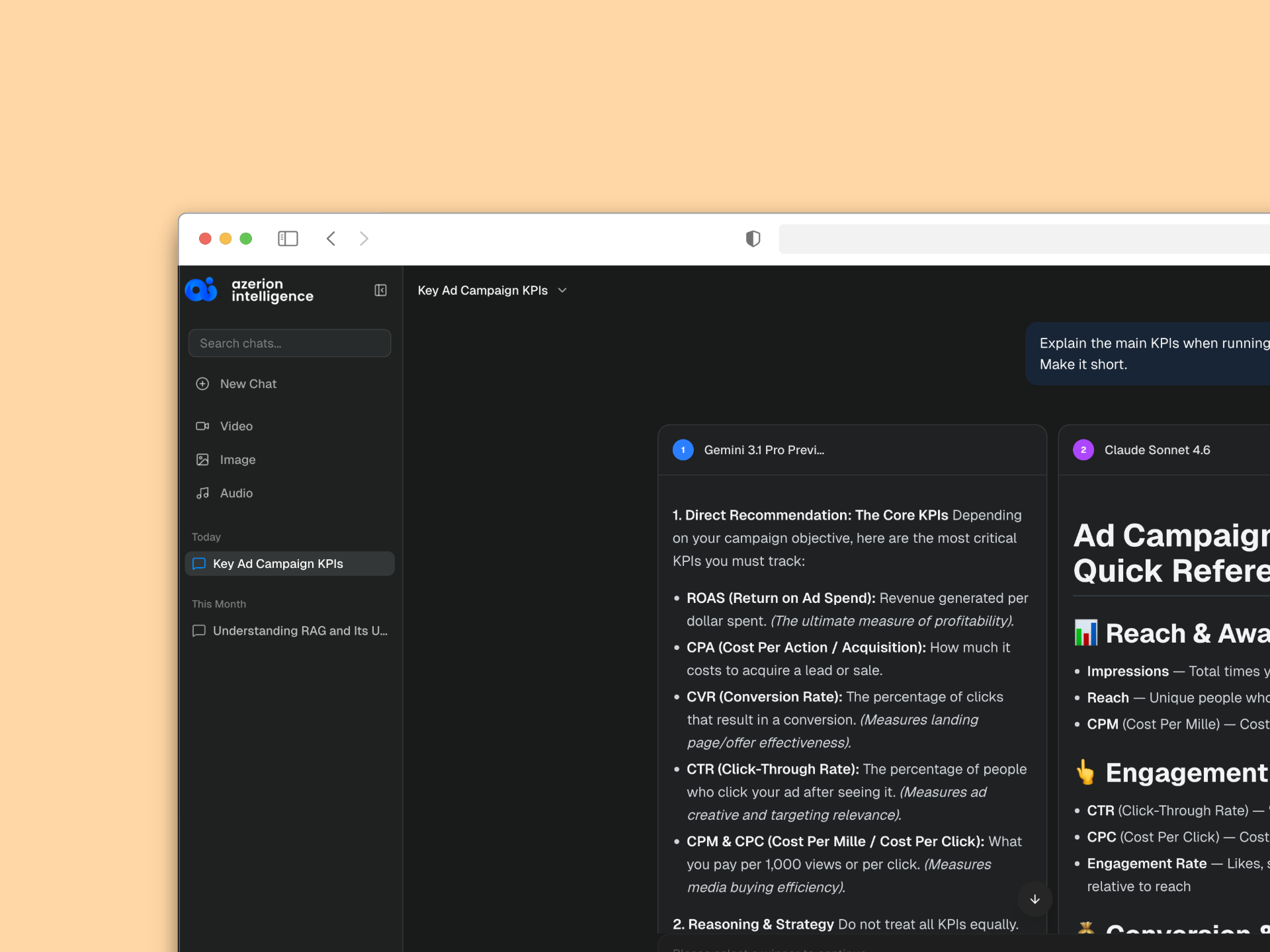
Compare mode is the part I'm most proud of. The user sends one prompt and gets answers from two or three models in parallel, rendered side by side. It removes the friction of opening separate tabs to benchmark Gemini against Claude on a real task, and it teaches the user which model fits which type of work. Auto mode does the same job silently for users who don't want to think about it, routing each message to the model most likely to handle it well.
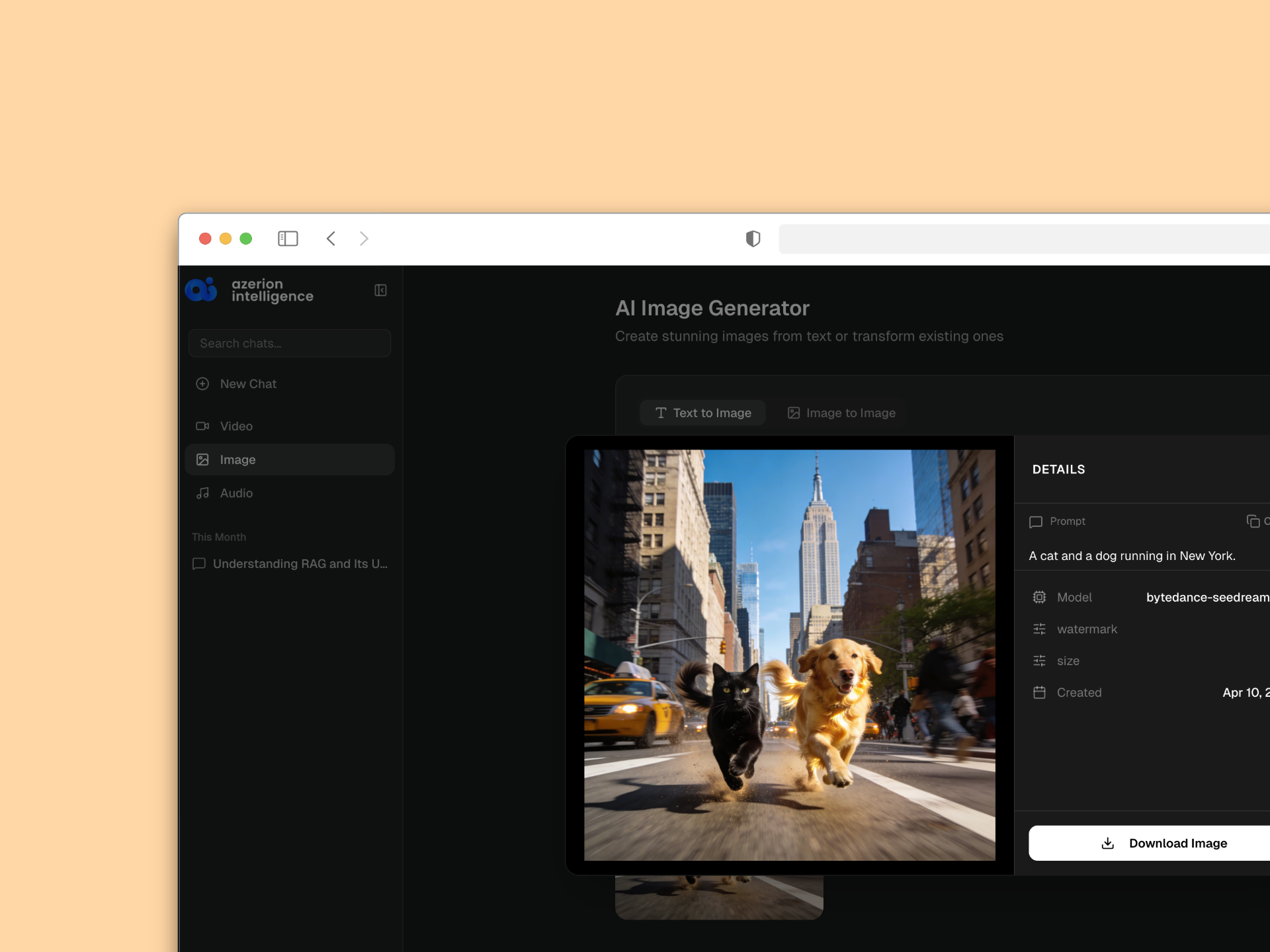
The image and video generators live in their own studio, with text-to-image, image-to-image, text-to-video and image-to-video flows. But the same models are also reachable from inside the chat, through an agent that detects when the user is asking for an image, a video or audio and triggers the right tool call. A user can stay in conversation, ask for "a cat and a dog running in New York", and get the rendered output inline without ever leaving the thread.
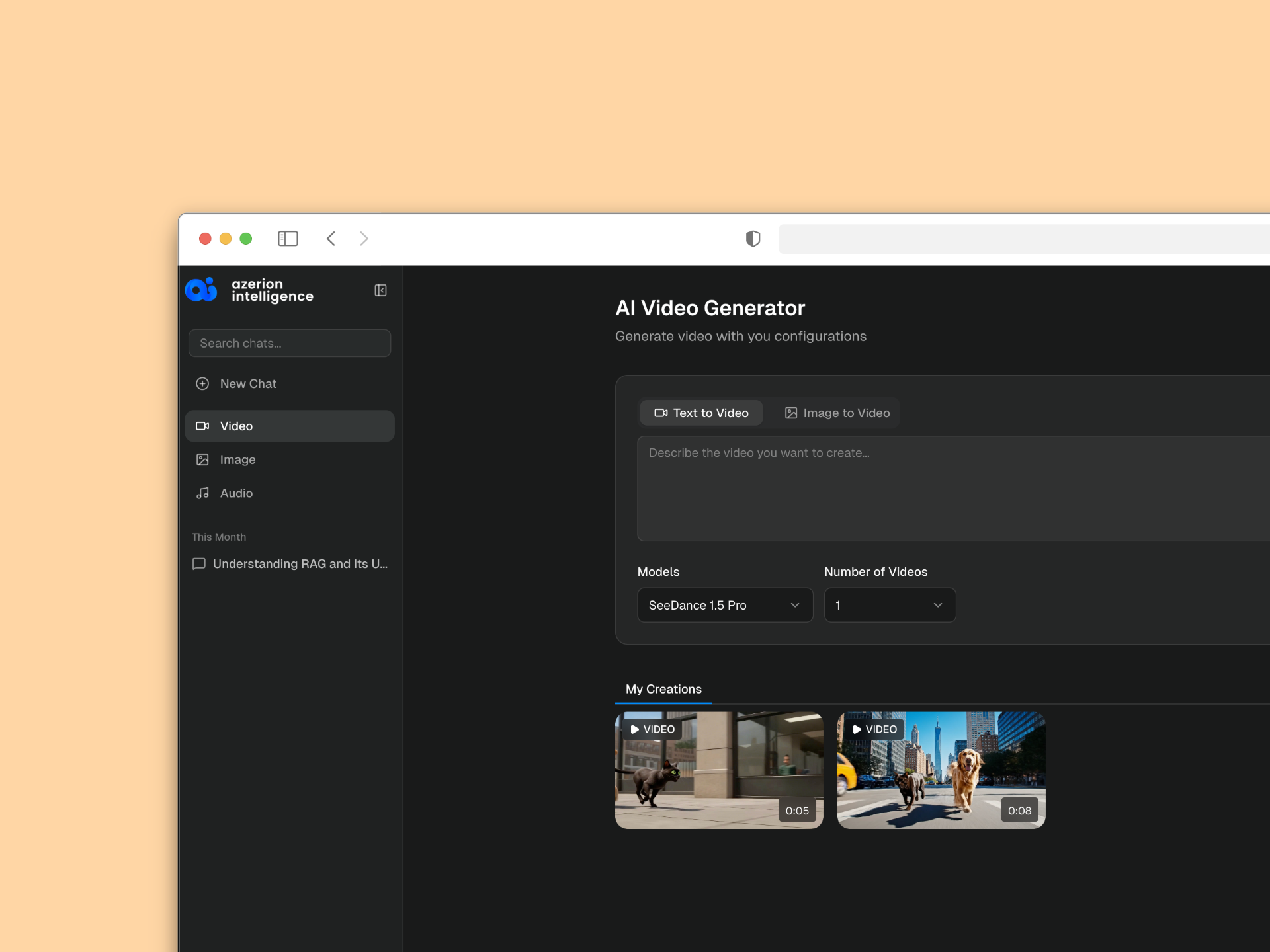
The video studio supports SeeDance, Kling, Veo and Runway, with text-to-video and image-to-video, configurable model and output count, and a creations gallery that keeps every generation reachable. Same logic as the image side: power users can dive into the studio for fine control, casual users can stay in chat and let the agent handle it.
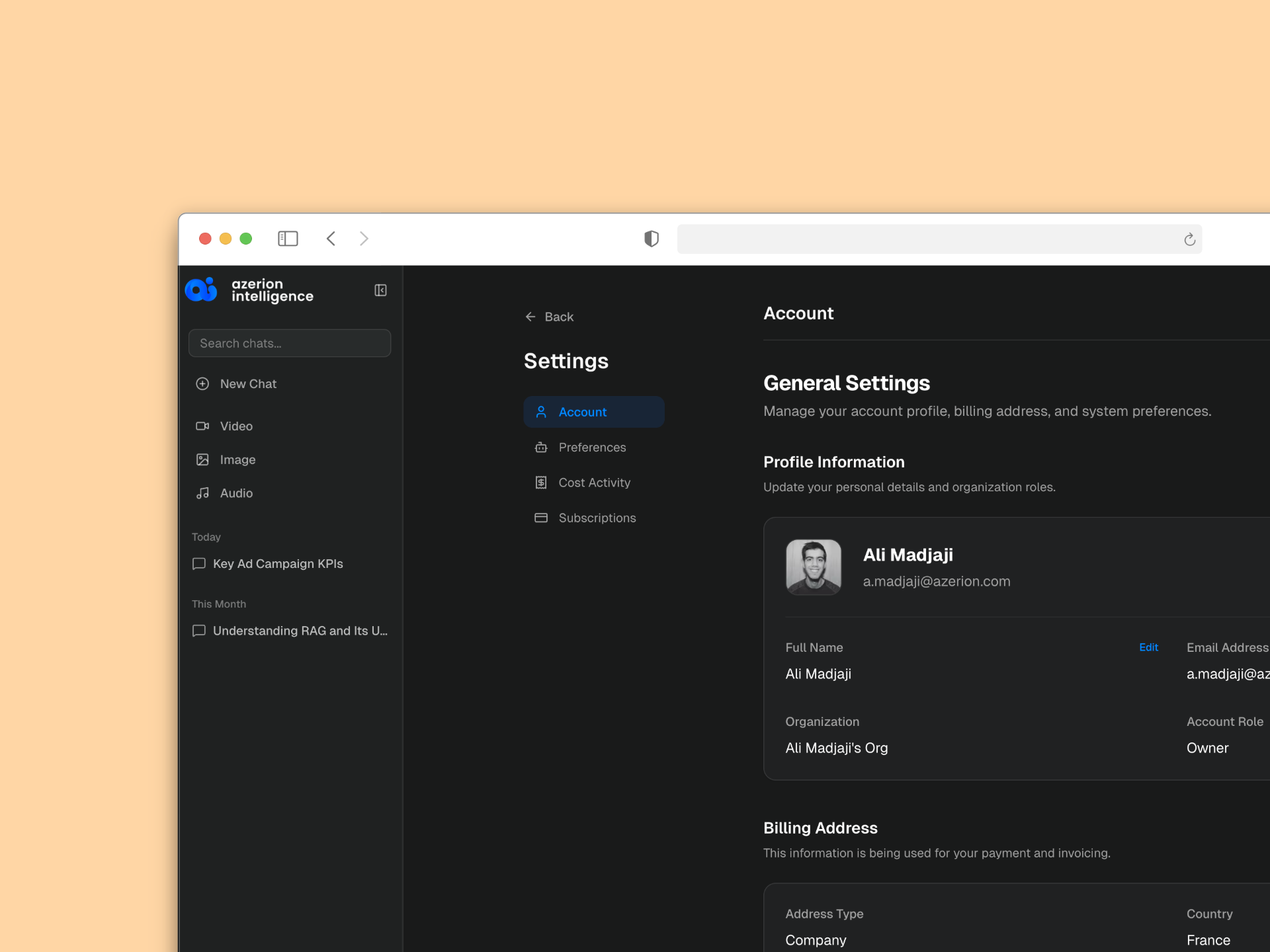
The account layer covers what the rest of the market gets wrong: a clear cost activity view, transparent subscriptions, and an organisation model that scales from solo creator to team. The whole product is built on the principle that creative tools should disappear into the work. The user shouldn't be picking models, managing credits across vendors or copying outputs between tabs. They should be making things.